The Future of Nebraska History Museum
For several years the Nebraska History Museum has lacked long-term exhibits that tell a comprehensive story of our state’s history. While some aspects of the state’s history are currently displayed, most of the collection remains in the basement.
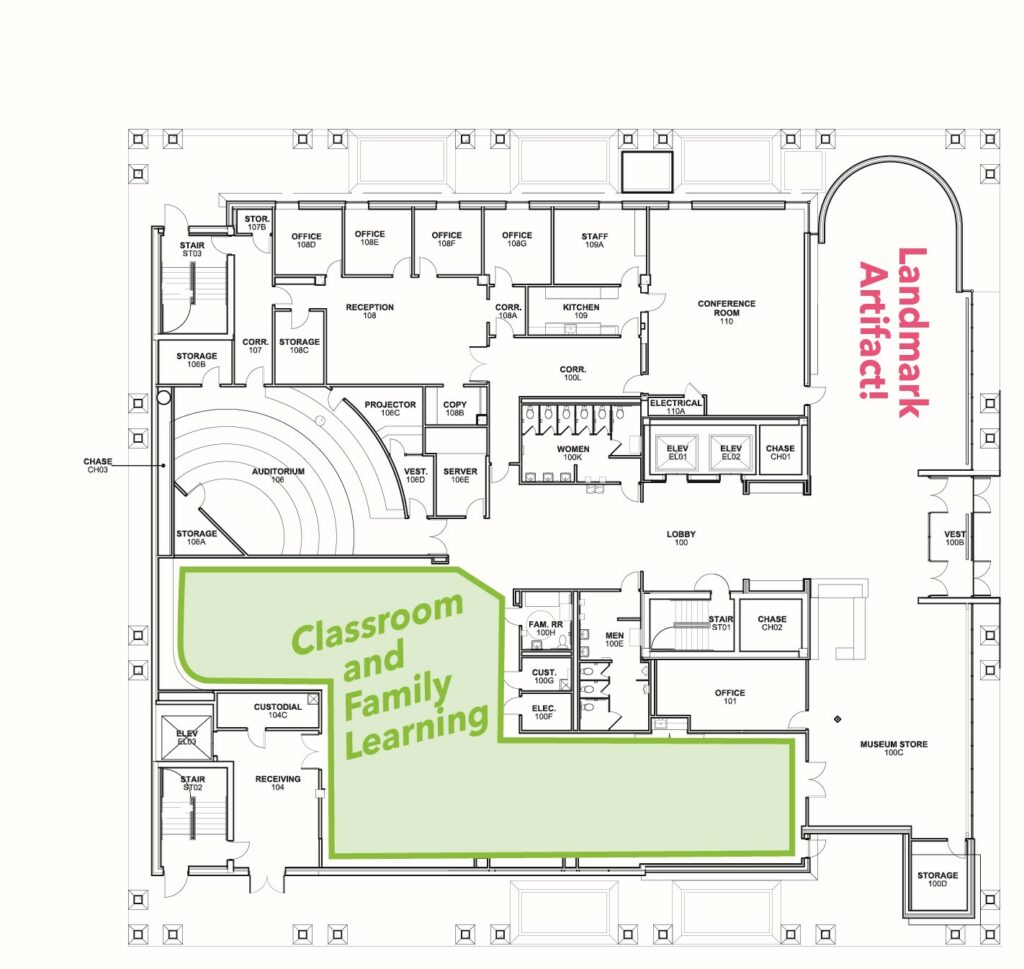
The Nebraska Timeline & Children and Family Learning Center
A Transformational Investment in Nebraska’s Story
The Nebraska State Historical Society and the Nebraska State Historical Society Foundation are partnering to raise $4.2 million to create the Nebraska Timeline Exhibit and the Children and Family Learning Center at the Nebraska History Museum.
This transformative revitalization effort will create a hands-on, immersive environment where families and children actively engage with Nebraska’s history. Anchoring the Center is the Nebraska Timeline Exhibit — a comprehensive chronological framework that shapes how visitors experience our state’s story through interactive, multigenerational learning.
Why This Project Matters
Since the Museum’s 2014 renovation, Nebraska has lacked core exhibits presenting a complete chronological narrative of our state’s history. While the Museum stewards more than 125,000 artifacts of statewide significance, limited infrastructure has prevented these objects from being displayed in cohesive, immersive, and accessible ways.
At the same time:
Nearly 40% of Museum visitors are Title I students and families, participating through Museums for All or subsidized field trip programs.
Educators seek immersive environments aligned with Nebraska state standards.
Families seek interactive, technology-integrated experiences that spark curiosity across generations.
This project addresses both access and excellence — ensuring history is not passively observed, but actively experienced.
A Five-Phase Timeline Experience
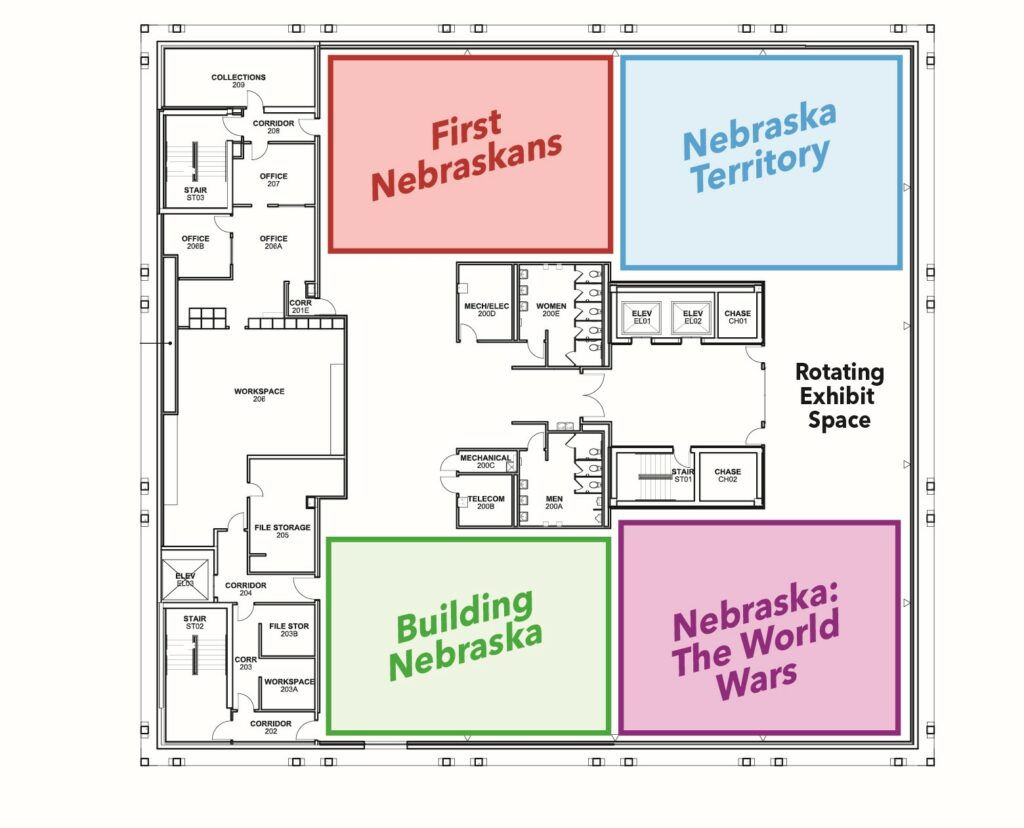
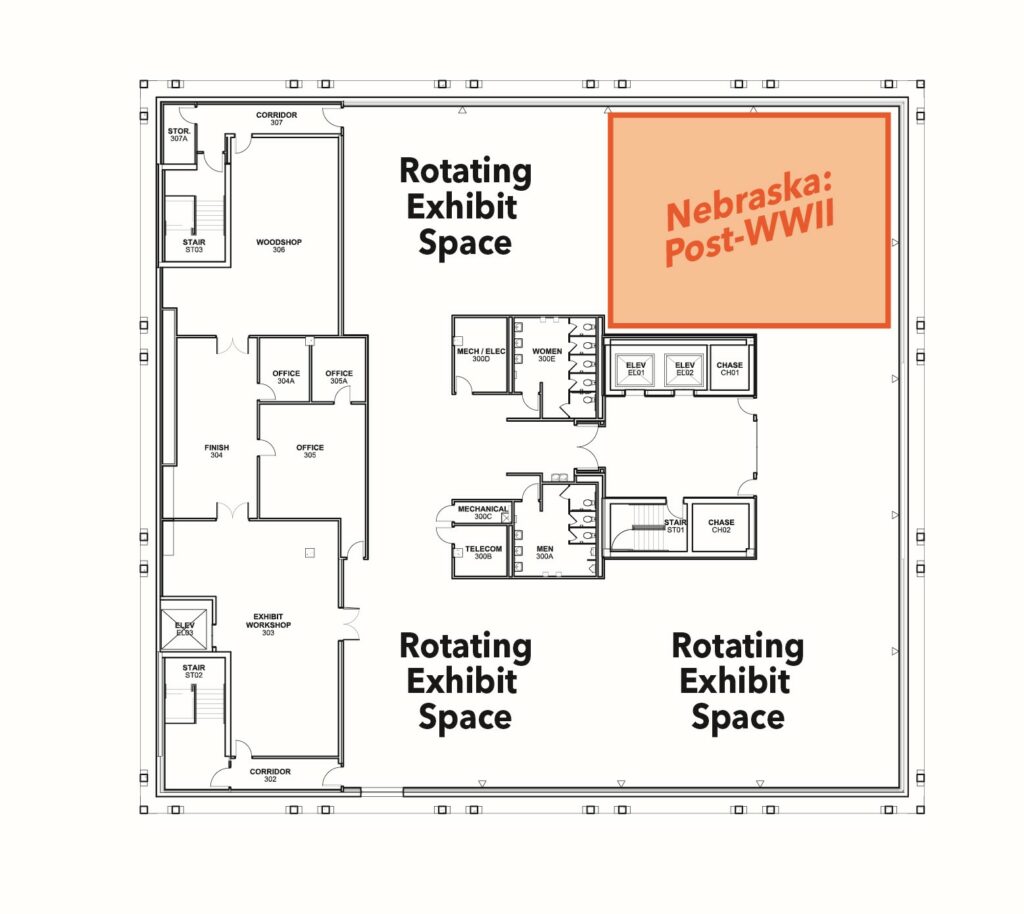
Structured as a five-phase initiative, the Nebraska Timeline guides visitors from prehistory to the present through five permanent galleries:
Native Nebraska – Developed in collaboration with tribal partners, affirming Indigenous cultures as living and continuous.
Territorial Era (1804–1867) – The fur trade, overland trails, the Kansas-Nebraska Act, and the path to statehood.
Building the State (1867–1916) – Railroads, homesteading, immigration, and agriculture as defining forces.
World Wars Era – Nebraska’s global engagement and transformation.
Modern Nebraska – Agricultural innovation, civil rights movements, economic change, and evolving civic identity.
Each gallery integrates interactive media, tactile learning components, maker-based exploration, accessible design features, and rotating artifacts — ensuring participatory discovery for learners of all ages.
Campaign Progress
In 2025 alone, NSHSF raised $353,000 for the project and received a transformational $1.9 million bequest designated for agricultural components.
With secured commitments and pending requests, the campaign now stands at:
$2,391,995.90 raised toward the $4.2 million goal
(57% of total project costs secured)
Ninety percent of the total project will be supported through private funding.
Funds support:
- Exhibit design and planning
- Fabrication and installation
- AV and interactive media
- Lighting and graphics
- Artifact cases and mounts
- Project Management
The phased, 18-month design-to-install cycle allows for disciplined cost control, modular fabrication, selective technology deployment, and sponsorship opportunities tied to specific galleries and features.
A Responsible and Sustainable Model
The annual operating impact to the Nebraska History Museum is approximately $310,487, covering staffing, utilities, maintenance, technology, and programming.
These costs will be supported through a combination of:
- State operational funding
- Increased admissions revenue
- Membership growth
- Earned income
- Endowment distributions
- Annual philanthropic support
As a state agency, the Nebraska State Historical Society has access to the Department of Administrative Services’ Building Services division, which specializes in projects of this scale and ensures professional oversight, compliance, and public accountability.
The Society already budgets for continued maintenance of Museum facilities, and the improved learning spaces will be incorporated into ongoing operations at a nominal increase.
Phased and Strategic Implementation
Each Timeline gallery is designed as a discrete phase with its own design, fabrication, and installation cycle.
Phase 1 – Building the State / Statehood – is already underway, with a planned rollout in Fall 2026.
Subsequent phases will proceed sequentially as funding is secured. This modular approach ensures:
No future obligations without adequate capital
Adaptability in technology deployment
Prioritized artifact rotation systems
Flexible installation of interactive components
Entire galleries or digital elements can advance independently as funding allows.
Smart Investment in Fabrication
To maximize philanthropic dollars, fabrication is being conducted largely in-house.
To jump-start the effort, NSHSF committed $85,000 for advanced fabrication tools, including:
3D Printer – Producing precision mounts for artifacts and detailed exhibit components such as the three Nebraska Capitol buildings and Thurston County petroglyphs
CNC Machine – Constructing custom cabinetry and exhibit casework
Laser Cutter – Creating acrylic cases, specialized mounts, signage lettering, and custom design elements
This approach ensures adaptability, cost efficiency, and long-term sustainability.
Building the Future Together
The Nebraska Timeline and Children and Family Learning Center will reshape how Nebraskans experience their shared history — strengthening civic understanding, expanding educational access, and creating a vibrant cultural destination for generations to come.
With more than half the campaign complete, momentum is strong.
Now is the time to build the next chapter of Nebraska’s story.
Donate today to support this project!
Nebraska State Historical Society and NSHSF will work closely together to raise the $2,120,000 for this rebuild and expansion. The five exhibits are estimated to cost $400,000 each, with an additional $120,000 needed for the Classroom and Family Learning Center.
To make the most efficient use of funding, we will do most of the fabrication in-house, designing display cases and other items for re-use and adaptability. Exhibits will be based on artifacts that we already have in the museum’s possession.
To donate via check, please make your check payable to the NSHS Foundation and mail to:
1201 Lincoln Mall, Suite 100
Lincoln, NE, 68508